
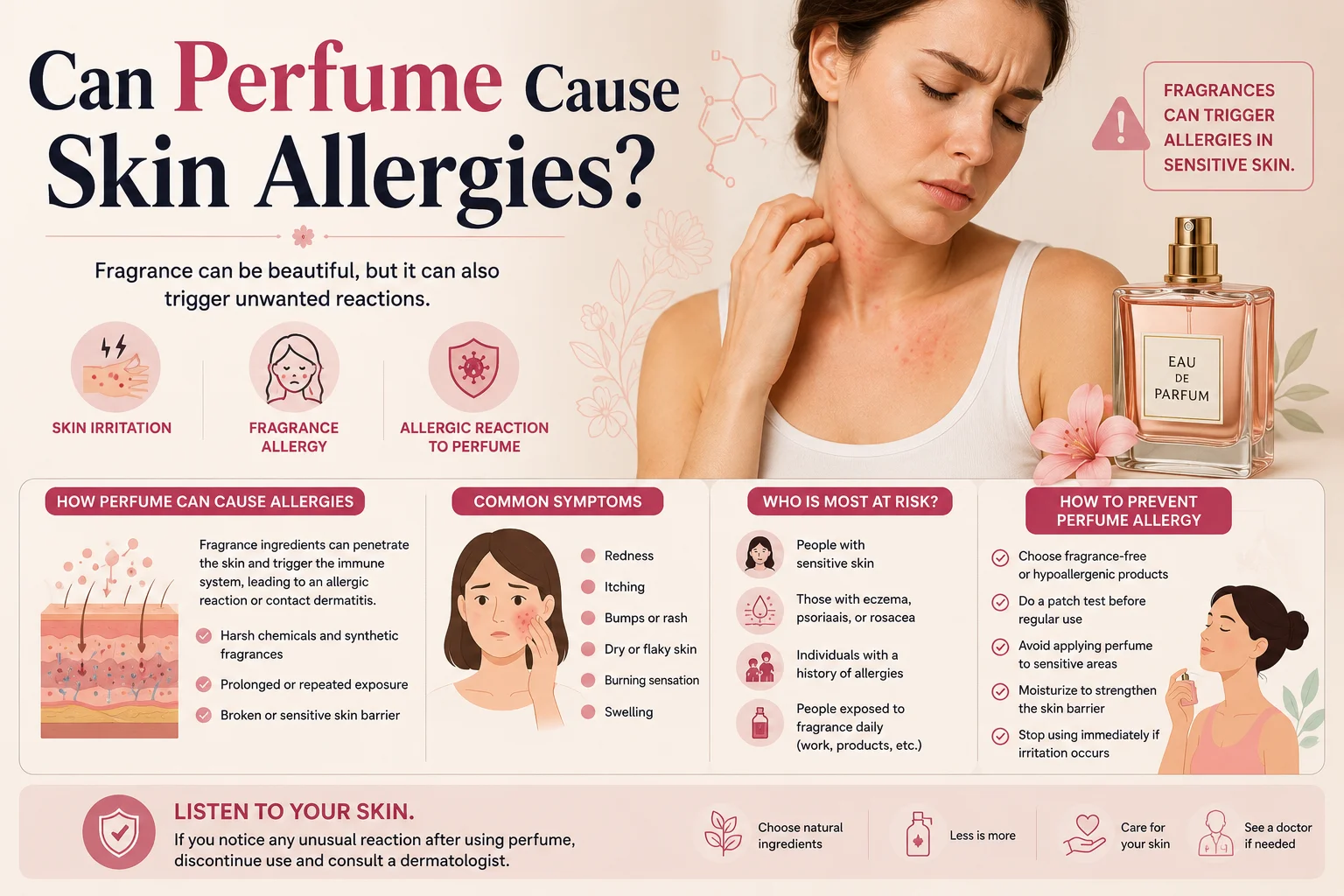
Scent is deeply woven into the human experience. It has the unique power to trigger distant memories, elevate our personal style, and transform our spaces. Yet, for millions of people worldwide, a spray of a favorite perfume or the use of a scented lotion does not bring joy. Instead, it acts as a precursor to a painful, itchy, and highly frustrating physical reaction.
A perfume allergy is one of the most common causes of cosmetic-induced skin irritation and fragrance allergy reactions.
Because fragrance formulations are highly complex and largely shrouded in trade-secret protections, identifying the exact root of an allergic reaction to perfume can feel like searching for a needle in a haystack.
This comprehensive medical and dermatological guide explores the science behind how fragrances interact with the human skin barrier. We will examine the physiological pathways of skin sensitization, identify who is most at risk, analyze the primary chemical culprits, and provide clear, actionable steps to diagnose, treat, and live comfortably with fragrance sensitivities.
read more abbout immune-boosting foods
Part 1: The Complex Chemistry Behind “Fragrance”
To understand why perfumes cause allergies, we must first pull back the curtain on the cosmetic industry’s labeling standards. On the back of a perfume bottle, shampoo, or body wash, you will almost always find a single, innocuous-looking word in the ingredient list: “Fragrance” (or Parfum).
This single word is actually a chemical umbrella.
-
The Trade Secret Protection: Under global cosmetic regulations, fragrance formulas are classified as proprietary trade secrets. This means manufacturers are not legally required to list the individual chemical components that create their signature scent.
-
The Reality of the Blend: A single “fragrance” in a product can be composed of anywhere from 50 to over 300 distinct chemical compounds. These ingredients include synthetic aroma-chemicals, natural complex essential oils, chemical solvents, preservatives, and stabilizers (like phthalates) designed to make the scent stick to your skin for hours.
-
The “Natural” Misconception: Many consumers assume that “natural” or “organic” essential oils are safer than synthetic chemicals. In reality, natural essential oils (such as lavender, tea tree, and ylang-ylang) are highly complex organic mixtures that contain dozens of naturally occurring volatile allergens. Your immune system does not distinguish between a synthetic allergen created in a laboratory and a natural allergen harvested from a flower.
Part 2: How Fragrances Trigger Skin Allergies: The Science
When a perfume allergen contacts the skin, it initiates a complex immunological cascade. It is critical to distinguish between two completely different types of skin reactions: Irritant Contact Dermatitis and Allergic Contact Dermatitis.
1. Irritant Contact Dermatitis (Non-Allergic)
This is the most common type of reaction. It does not involve the immune system.
-
How it happens: The volatile chemicals or alcohols in a perfume directly strip away the skin’s protective lipid barrier, causing surface damage and inflammation.
-
The Symptoms: Mild redness, a burning or stinging sensation immediately after application, and dry, tight, or peeling skin. It usually stays confined to the exact spot where the perfume was applied.
2. Allergic Contact Dermatitis (Immune-Mediated)
This is a true allergic reaction to perfume and involves a delayed-type hypersensitivity reaction (Type IV allergy) mediated by the immune system’s T-cells.
-
The Sensitization Phase (First Exposure):
Fragrance chemical molecules are typically too small to trigger an immune response on their own. These small molecules are called haptens. When a hapten penetrates your skin barrier, it binds with natural proteins in your epidermis to create a complete allergen.
Specialized immune cells in your skin (Langerhans cells) grab this protein-hapten complex and carry it to your lymph nodes, presenting it to your T-lymphocyte cells. Your T-cells create a “memory” of this specific chemical. You do not show any visible rash during this initial phase, which can take days, weeks, or even years of repeated exposure to build.
-
The Elicitation Phase (Re-exposure):
Once your T-cells are sensitized, any future contact with that specific fragrance chemical triggers a rapid, aggressive localized immune response. Your T-cells migrate to the site of contact, releasing inflammatory cytokines that damage surrounding skin cells.
-
The Symptoms: Intense itching, a bright red blistering rash (dermatitis), swelling, and oozing. Crucially, because this is a delayed reaction, symptoms typically do not peak until 24 to 72 hours after exposure, making it highly difficult for the patient to connect the flare-up to a specific perfume used days prior.
Part 3: Who Is Most at Risk?
While a perfume allergy can develop at any point in a person’s life, certain individuals possess biological and environmental risk factors that make them significantly more susceptible to fragrance sensitization.
1. Individuals with a Compromised Skin Barrier
Your skin’s outermost layer (the stratum corneum) acts as a brick-and-mortar shield, keeping moisture in and environmental hazards out. If this shield is weakened, fragrance haptens can easily penetrate deep into the live layers of the skin, fast-tracking the immune sensitization process.
-
Atopic Dermatitis (Eczema): Eczema sufferers often have genetic mutations (such as in the filaggrin gene) that result in a highly porous, dry skin barrier. This makes them prime targets for developing secondary fragrance allergies.
-
Psoriasis and Rosacea: Chronic inflammatory skin conditions keep the skin in a constant state of hyper-permeability and low-grade inflammation, making the immune system highly reactive to topically applied scents.
2. The Beauty and Wellness Workforces
Occupational exposure is a massive driver of chemical sensitization. The more frequently your skin is exposed to high concentrations of volatile organic compounds, the higher the likelihood of your T-cells mounting an immune defense.
-
Hairdressers and Barbers: Constantly handle scented shampoos, hair dyes, styling products, and shaving creams.
-
Aestheticians and Massage Therapists: Exposed to high concentrations of essential oils, massage lotions, and scented face creams on a daily basis.
-
Retail Perfume Associates: Spend hours working in enclosed spaces saturated with airborne perfume particles, exposing both their skin and respiratory pathways to concentrated fragrance molecules.
3. Demographic Patterns: Age and Gender
-
Gender Distributions: Historically, women have registered higher rates of fragrance allergies than men. However, dermatologists attribute this disparity to higher overall exposure rates—women typically apply a wider variety of scented cosmetic products (moisturizers, makeup, hair care, perfumes) on a daily basis. As grooming trends among men continue to rise, the gender gap in fragrance allergies is steadily closing.
-
The Age Factor: Sensitization is a cumulative process. The older we get, the more total chemical exposures our immune systems have processed. Consequently, fragrance allergies are highly common in middle-aged and elderly populations who have spent decades using scented personal care products.
Part 4: The Core Culprits: The EU’s 26 Regulated Fragrance Allergens
Through decades of clinical patch testing, dermatologists have identified a core group of fragrance compounds that are responsible for the vast majority of skin irritation and allergic reactions.
To protect consumers, the European Union mandates that if any of the 26 highly documented fragrance allergens are present in a cosmetic formula above a specific threshold ($0.001\%$ for leave-on products like perfumes, and $0.01\%$ for rinse-off products like soaps), they must be explicitly listed on the ingredient label, rather than hidden under the generic term “fragrance.”
Here is a breakdown of the most common and potent allergens found in modern perfumes:
| Allergen Name | Scent Profile | Commonly Found In | Allergen Potency |
| Linalool | Soft, floral, woody, lavender-like | Lavender oils, citrus oils, floral perfumes | High (when oxidized by air) |
| Limonene | Fresh, sharp citrus | Lemon, orange, bergamot oils, fresh fragrances | Moderate (high when oxidized) |
| Oakmoss Extract (Evernia prunastri) | Deep, earthy, woody, forest-like | Chypre and Fougere perfumes, colognes | Very High (highly sensitizing) |
| Cinnamal / Cinnamic Aldehyde | Warm, sweet, spicy cinnamon | Oriental perfumes, holiday-themed soaps | Very High |
| Eugenol | Spicy, warm, clove-like | Clove oil, spicy colognes, rose formulations | High |
| Geraniol | Sweet, rosy, floral | Rose oil, geranium oil, feminine perfumes | Moderate |
Crucial Dermatological Note on Oxidation: Compounds like Linalool and Limonene are relatively weak allergens in their pure, freshly manufactured states. However, when a perfume bottle is opened and exposed to the air, these compounds undergo oxidation. The oxidized forms (hydroperoxides) are incredibly potent allergens that easily trigger severe contact dermatitis. Always discard expired perfume bottles to minimize this risk.
Part 5: Diagnostic and Treatment Protocol for Perfume Allergies
If you suspect your skin rash, chronic itching, or facial redness is caused by a fragrance allergy, it is critical to follow a systematic, medically backed diagnostic and treatment protocol rather than relying on guesswork.
To calm a current, active skin flare-up, you must remove the triggers. Stop using all colognes, perfumes, scented body washes, scented laundry detergents, and essential oil diffusers immediately. Switch your entire personal care routine to dermatologically approved, “fragrance-free” (not “unscented”) products for at least two weeks.
To treat active contact dermatitis, consult a dermatologist. They may prescribe a short course of a topical corticosteroid cream (such as hydrocortisone) to suppress the localized T-cell immune response and calm the itching. Keep the area moisturized with pure, bland emollients like white petrolatum (Vaseline) or ceramides to rebuild the damaged skin barrier.
An allergy cannot be accurately diagnosed by a standard blood test or a skin-prick test (which are designed for food and pollen allergies). You must visit a dermatologist or allergist for a Patch Test.
Small quantities of the most common fragrance allergens (usually within the European Baseline Series or a specialized Fragrance Mix series) are applied to your back under hypoallergenic adhesive patches. The patches remain in place for 48 hours, are removed, and the skin is evaluated again at 72 or 96 hours to identify delayed allergic reactions.
Once your patch test identifies the specific chemical allergen (e.g., Isoeugenol or Oakmoss), you must become a vigilant label reader. Inspect all cosmetic and household products for your specific allergen. Cross-reference ingredient lists before purchasing any new personal care products.
Part 6: How to Live Safely and Stylishly with Fragrance Sensitivity
Receiving a diagnosis of a fragrance allergy or possessing highly sensitive skin does not mean you have to abandon personal styling or lock yourself away in a sterile bubble. It simply requires adjusting your application methods and consumer habits.
1. “Fragrance-Free” vs. “Unscented”: The Crucial Distinction
When shopping for skincare, hair care, or laundry detergents, understanding the difference between these two terms is vital for protecting your skin:
-
Fragrance-Free: This is the gold standard for allergy sufferers. It means the product contains absolutely no fragrance chemicals or essential oils added to create a smell or mask an odor.
-
Unscented: This is a marketing term that can be highly misleading. An “unscented” product may still contain fragrance chemicals or masking agents designed to cover up the unpleasant, raw chemical smell of the base ingredients. While the product has no noticeable smell to your nose, the volatile allergens are still physically present in the formula and can easily trigger an allergic reaction to perfume.
2. The “Clothes-Only” Perfume Application Method
If you have sensitive skin or mild fragrance sensitivities, but absolutely refuse to give up your favorite designer perfume, you can protect your skin by changing where you apply it.
-
The Strategy: Never spray perfume directly onto your neck, wrists, chest, or behind your ears, where the skin is thin and easily sensitized. Instead, spray your perfume onto your outer clothing items (like your coat, scarf, or shirt hem) before putting them on.
-
Why it works: This allows you to enjoy your signature scent throughout the day without allowing the volatile haptens to physically contact and penetrate your skin barrier, completely bypassing the contact dermatitis pathway. (Note: Test a small, hidden patch of fabric first to ensure the perfume’s oils do not stain the material).
Summary: Your Safe Skin Fragrance Guide
Managing sensitive skin or a diagnosed allergy requires knowing which products to trust. Use this reference table to navigate cosmetic aisles with absolute confidence:
| Product Category | What to Avoid | Safe Alternatives to Look For |
| Fine Perfumes | Direct skin sprays, high-alcohol colognes | Clothes-spraying, solid perfumes (applied to clothing) |
| Moisturizers & Lotions | Scented body butters, citrus-infused creams | Ceramide creams labeled “Fragrance-Free” |
| Soaps & Body Washes | Heavily scented antibacterial soaps | Mild, non-soap synthetic cleansers (Syndets) |
| Laundry Care | Scented liquid detergents, dryer sheets | Hypoallergenic, dye-free, fragrance-free detergents |
By understanding the physiological pathways of skin sensitization, learning to read labels for the most common chemical triggers, and adjusting your application habits, you can protect your immune system and enjoy a comfortable, itch-free lifestyle without sacrificing your personal aesthetic.
Part 7: The Respiratory Connection: When Scent Goes Beyond the Skin
While dermatologists focus primarily on the skin-based manifestations of a fragrance allergy, volatile organic compounds (VOCs) in perfumes also travel through the air. For many individuals, an allergic reaction to perfume does not stop at a skin rash—it can actively trigger respiratory distress and systemic neurological symptoms.
1. Sensory Hyperreactivity (SHR)
Unlike a true IgE-mediated respiratory allergy (like a peanut or pollen allergy), perfume-induced respiratory distress is often classified as Sensory Hyperreactivity (SHR).
-
The Mechanism: The mucosal lining of your nose, throat, and lungs is packed with sensitive nerve endings called TRP (Transient Receptor Potential) channels. Volatile fragrance molecules bind directly to these receptors, sending emergency signals to the brain that mimic a chemical irritant threat.
-
The Symptoms: Sudden coughing fits, a tight chest, wheezing, sneezing, and a runny nose (non-allergic rhinitis).
2. Asthma Triggers and Bronchospasms
For the millions of people living with chronic asthma, airborne perfumes are highly dangerous environmental triggers. Inhaling concentrated synthetic musks or floral terpenes can cause the smooth muscles surrounding the airways to spasm and constrict (bronchospasm), leading to a sudden, acute asthma attack.
3. Scent-Induced Migraines and Headaches
Have you ever walked past a department store perfume counter and felt an immediate throb behind your eyes?
-
Volatile fragrance compounds easily cross the blood-brain barrier via the olfactory pathway.
-
For migraine-prone individuals, certain strong synthetic scents cause immediate dural blood vessel dilation and stimulate the trigeminal nerve, triggering a full-blown migraine, nausea, and cognitive “brain fog.”
Part 8: Pediatric Fragrance Sensitivity: Protecting Developing Skin
When it comes to skin irritation, children and infants are in a category of their own. A child’s skin barrier is structurally and physiologically vastly different from an adult’s.
Why Children Are at Elevated Risk
-
Thinner Epidermal Layer: A baby’s skin is up to 30% thinner than adult skin. This means the protective physical barrier is highly porous, allowing topically applied fragrance chemicals to penetrate deep into the dermis almost instantly.
-
Underdeveloped Immune Systems: A young child’s immune system is still learning to distinguish between harmless environmental proteins and genuine threats. Exposing baby skin to complex essential oils or synthetic perfumes increases the risk of early-life sensitization, setting them up for chronic eczema and lifetime fragrance allergies.
-
The “Baby Scent” Paradox: Ironically, the baby care market is flooded with heavily scented products. Many baby wipes, powders, shampoos, and laundry detergents are packed with powdery floral scents to mimic a “clean baby smell.”
Best Practices for Parents
-
Choose “Fragrance-Free” Always: Look for baby products that explicitly state “fragrance-free” and carry seals of approval from organizations like the National Eczema Association (NEA).
-
Avoid Natural “Calming” Essential Oils: Lavender and chamomile essential oils are highly popular in baby sleep lotions. However, they contain high levels of linalool and geraniol, which are potent contact allergens. Stick to pure, unscented organic sunflower or jojoba oil for baby massage.
Part 9: Global Regulatory Landscapes: EU vs. US FDA on Scent Transparency
The regulatory standards governing how cosmetics companies list fragrance ingredients vary wildly around the world, directly impacting consumer safety.
1. The European Union (The Gold Standard)
The EU’s Scientific Committee on Consumer Safety (SCCS) is the world leader in cosmetic safety. They strictly regulate the concentration of raw fragrance materials allowed in commercial products and ban highly sensitizing ingredients entirely (such as HICC, a popular synthetic oakmoss substitute). Their mandate of listing key allergens on the box allows sensitive consumers to easily avoid their specific chemical triggers.
2. The United States (The Changing Landscape)
Historically, the US FDA exercised very little oversight over cosmetic ingredients, allowing companies to hide hundreds of chemicals behind the word “fragrance.”
-
The MoCRA Shift: This changed significantly with the passage of the Modernization of Cosmetics Regulation Act (MoCRA). This law grants the FDA expanded authority over cosmetic safety, including mandatory adverse event reporting, facility registration, and crucially, compulsory labeling of fragrance allergens on packaging, bringing the US much closer to the high transparency standards of the European Union.
Part 10: Truly Safe and Hypoallergenic Scent Alternatives
If you have been diagnosed with a fragrance allergy but still crave the sensory joy of scent, there are modern, scientific workarounds that allow you to enjoy a beautiful olfactory environment without compromising your skin health.
1. Single-Molecule Synthetic Fragrances
Many classic perfumes contain hundreds of raw materials blended together, increasing the mathematical probability of a reaction.
-
The Alternative: Brands like Escentric Molecules utilize single, pure synthetic aroma-molecules (like Iso E Super or Ambroxan) suspended in pure alcohol.
-
Why it works: These highly stable, lab-synthesized molecules do not undergo the rapid oxidation that natural essential oils do, and they lack the complex impurities of multi-ingredient perfumes, making them far less likely to trigger contact dermatitis.
2. High-Quality Hydrosols (Flower Waters)
Hydrosols are the pure, water-based byproducts of the steam-distillation process used to extract essential oils.
-
Why they are safer: While essential oils are highly concentrated, volatile lipophilic compounds, hydrosols contain only the water-soluble, highly diluted micro-traces of the plant’s scent. They offer a soft, fleeting whisper of scent that is exceptionally gentle on sensitive skin.
3. Ambient Scenting via Passive Diffusion
If you cannot wear scent on your body, you can still scent your environment safely.
-
The Method: Use a passive reed diffuser or a cold-air nebulizing scent diffuser in a well-ventilated corner of your home.
-
The Safety Rule: Ensure you are using high-quality, pure botanical extracts, keep the device clean to prevent mold accumulation, and never use diffusers in tight, enclosed spaces if you suffer from asthma or sensory hyperreactivity.
Navigating the Scented World with Confidence
A perfume allergy can feel like a daunting diagnosis that robs you of a beloved sensory experience. However, by understanding the biological pathways of skin sensitization, recognizing your specific chemical triggers, and becoming an active, educated reader of cosmetic labels, you can reclaim control over your environment.
True beauty and personal styling should never come at the cost of your physical comfort. Embrace the clean, calming luxury of fragrance-free living, protect your skin barrier, and choose your olfactory experiences with absolute intention and care.