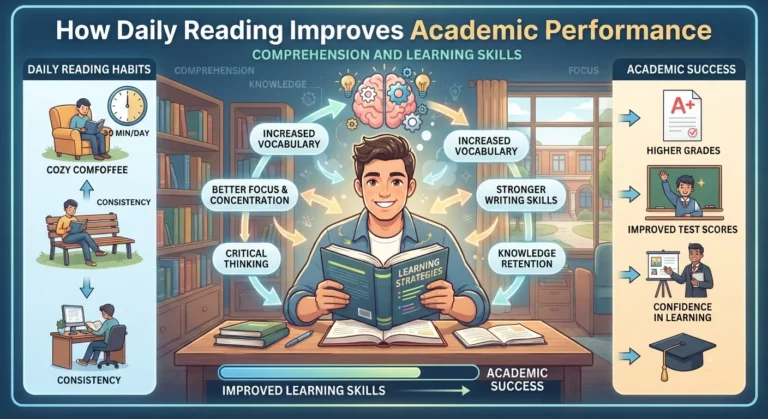

Strong academic writing is one of the most valuable skills students can develop. Whether you are writing essays, research papers, literature reviews, dissertations, or journal articles, the ability to communicate ideas clearly and logically directly influences academic success. Unfortunately, many students struggle with organizing arguments, maintaining a formal tone, citing sources correctly, and presenting evidence effectively.
While practice remains essential, learning from high-quality academic writing books can dramatically accelerate improvement. These books provide structured guidance, practical exercises, real-world examples, and expert advice that help students build confidence and develop professional writing habits.
The best writing skills books go beyond grammar rules. They explain how to think critically, organize ideas, write persuasively, avoid plagiarism, improve clarity, revise drafts effectively, and communicate complex concepts in a reader-friendly manner. Whether you are an undergraduate student writing your first university essay or a postgraduate researcher preparing a thesis, the right resources can make a significant difference.
This comprehensive guide introduces some of the best books for academic writing, explains what each book teaches, compares beginner and advanced resources, and provides practical advice on choosing the right materials to support continuous writing improvement.
read more about study tips
Why Academic Writing Skills Matter
Academic writing is much more than completing assignments.
It helps students develop:
- Critical thinking
- Logical reasoning
- Research skills
- Communication abilities
- Problem-solving techniques
- Professional confidence
Strong writing skills remain valuable long after graduation because they are useful in business, education, government, healthcare, technology, and many other industries.
What Makes a Great Academic Writing Book?
Not every writing guide provides the same value.
The best academic writing books usually include:
- Clear explanations
- Practical examples
- Step-by-step guidance
- Revision techniques
- Grammar support
- Research advice
- Citation guidance
- Writing exercises
Books that combine theory with practical application tend to produce the greatest improvements.
Who Should Read Academic Writing Books?
These resources benefit a wide range of learners, including:
- High school students
- Undergraduate students
- Graduate students
- PhD candidates
- Researchers
- University instructors
- Academic editors
- International students learning English
Regardless of experience level, every writer can continue improving.
Essential Skills Every Academic Writer Needs
Before choosing a book, it helps to understand the core skills involved in academic writing.
These include:
- Research
- Planning
- Organization
- Argument development
- Evidence evaluation
- Referencing
- Editing
- Proofreading
The strongest writing skills books address all of these areas rather than focusing on grammar alone.
Best Academic Writing Books for Beginners
Students new to university writing often benefit from books that explain the basics in simple language.
Look for books that cover:
- Essay structure
- Paragraph organization
- Thesis statements
- Topic sentences
- Formal writing style
Building a strong foundation makes advanced writing much easier later.
Books That Focus on Research Writing
Research papers require additional skills beyond essay writing.
Good research writing books explain:
- Literature reviews
- Research questions
- Methodology
- Evidence analysis
- Academic integrity
- Citation management
These resources are especially useful for postgraduate students.
Books That Improve Critical Thinking
Academic writing depends heavily on critical thinking.
The best resources teach students how to:
- Analyze arguments
- Evaluate evidence
- Compare viewpoints
- Identify assumptions
- Build logical conclusions
Improving critical thinking naturally improves writing quality.
Recommended Academic Writing Books
They Say / I Say
One of the most recommended academic writing books, this guide teaches students how to engage with existing research while presenting their own ideas clearly.
Key lessons include:
- Structuring arguments
- Responding to sources
- Building persuasive discussions
- Using academic templates
It is particularly valuable for students learning argumentative writing.
The Craft of Research
Ideal for students beginning research projects.
Topics include:
- Choosing research questions
- Evaluating evidence
- Organizing information
- Writing persuasive research papers
Many universities recommend this book for thesis preparation.
How to Write Better Essays
This practical guide focuses on improving university essays.
Students learn:
- Planning techniques
- Time management
- Editing strategies
- Academic style
It is especially useful for first-year university students.
Writing Your Journal Article in Twelve Weeks
A favorite among postgraduate researchers.
It provides a structured system for:
- Planning
- Drafting
- Revising
- Publishing academic articles
Many doctoral students use it while preparing manuscripts for academic journals.
Style: Lessons in Clarity and Grace
Clear writing remains one of the most important academic skills.
This classic book explains:
- Sentence clarity
- Concise writing
- Reader-friendly structure
- Professional editing
It is valuable for writers at every level.
Books That Improve Grammar
Grammar supports effective communication but should never become the sole focus.
Good grammar resources teach:
- Sentence structure
- Verb agreement
- Punctuation
- Academic vocabulary
- Common writing mistakes
Combined with broader writing improvement strategies, grammar knowledge enhances overall writing quality.
Writing Skills Beyond Grammar
Excellent academic writers also master:
- Organization
- Cohesion
- Flow
- Logical progression
- Transitions
- Evidence integration
These skills often distinguish outstanding papers from average ones.
Books That Help International Students
Students writing in English as a second language often face additional challenges.
Useful books focus on:
- Academic vocabulary
- Formal expressions
- Common language errors
- Citation language
- Research terminology
Many include exercises specifically designed for English learners.
Digital vs Printed Books
Both formats offer advantages.
Printed Books
Benefits include:
- Easier note-taking
- Better concentration
- Reduced screen time
- Long-term reference
Digital Books
Advantages include:
- Portability
- Search functions
- Lower prices
- Instant access
Many students choose digital versions for convenience while keeping printed copies of their favorite references.
Building a Personal Writing Library
Rather than purchasing dozens of books, consider building a focused collection.
A balanced library might include:
- One grammar guide
- One research writing guide
- One academic style guide
- One editing resource
- One critical thinking book
This combination supports continuous development throughout university.
How Often Should You Read Writing Books?
Reading alone is not enough.
For every chapter you study:
- Apply the techniques immediately.
- Practice writing.
- Revise previous assignments.
- Seek feedback.
- Repeat regularly.
Consistent application produces lasting improvement.
read more about audio quality for online learning
Common Mistakes Students Make
Many students:
- Read without practicing.
- Focus only on grammar.
- Ignore revision.
- Skip outlining.
- Write without planning.
- Depend entirely on spellcheck software.
The best academic writing books encourage active learning rather than passive reading.
Choosing the Right Book
When selecting a writing guide, consider:
- Your academic level
- Field of study
- Current writing ability
- Learning style
- Writing goals
Beginners often benefit from practical examples, while advanced researchers may need specialized resources.
Signs a Book Is Worth Reading
High-quality writing skills books usually feature:
- Practical exercises
- Clear explanations
- Real examples
- Updated guidance
- Positive academic reputation
- Step-by-step instruction
Books that encourage regular practice tend to produce the greatest writing improvement.
As students progress through university, their writing responsibilities become more demanding. Essays evolve into research papers, literature reviews, dissertations, conference papers, and journal articles. At this stage, choosing the right academic writing books becomes even more important because advanced writing requires stronger analytical thinking, better organization, and greater attention to evidence.
This section explores advanced resources, compares different types of writing skills books, and explains how each can contribute to long-term writing improvement.
Understanding the Different Types of Academic Writing Books
Not every writing book serves the same purpose.
Most resources fall into several categories.
Essay Writing Guides
These books focus on:
- Essay planning
- Thesis statements
- Paragraph structure
- Argument development
- Conclusions
They are ideal for undergraduate students.
Research Writing Books
These emphasize:
- Research methodology
- Literature reviews
- Academic arguments
- Evidence evaluation
- Research ethics
Graduate students benefit greatly from these resources.
Grammar and Style Guides
Their primary focus includes:
- Grammar
- Sentence structure
- Word choice
- Clarity
- Punctuation
These books help writers polish their final drafts.
Editing and Revision Books
Rather than teaching first drafts, these guides explain how to improve existing work.
Topics often include:
- Self-editing
- Proofreading
- Eliminating repetition
- Improving readability
- Strengthening arguments
Many experienced writers believe revision is where excellent writing truly develops.
Best Books for Research Writing
The Craft of Research
This book is widely recommended because it explains every stage of academic research.
Students learn how to:
- Select meaningful research questions
- Gather reliable evidence
- Analyze information
- Build logical arguments
- Present findings clearly
It is particularly valuable for graduate students preparing dissertations.
Writing Your Journal Article in Twelve Weeks
Publishing research can feel overwhelming.
This book divides the process into manageable weekly goals, covering:
- Planning
- Drafting
- Revising
- Submission preparation
- Responding to reviewers
Many doctoral students consider it an essential resource.
How to Write a Better Thesis
This practical guide explains how to organize long academic projects.
Important topics include:
- Time management
- Research planning
- Writing schedules
- Chapter organization
- Maintaining motivation
Large writing projects become much easier with structured planning.
Books That Improve Academic Style
Excellent academic writing depends on clarity rather than complexity.
Some students mistakenly believe that using long sentences and complicated vocabulary makes their writing stronger.
The opposite is usually true.
The best style books encourage:
- Simple language
- Logical organization
- Precise vocabulary
- Clear transitions
- Reader-focused communication
These habits improve readability without reducing academic quality.
Developing Better Academic Vocabulary
Academic vocabulary differs from everyday English.
Strong vocabulary books teach students how to:
- Replace informal expressions
- Use discipline-specific terminology
- Avoid repetition
- Write more precisely
Building vocabulary gradually produces more natural improvement than memorizing long word lists.
Books That Teach Critical Thinking
Writing quality depends heavily on thinking quality.
Critical thinking books encourage students to:
- Evaluate evidence objectively
- Question assumptions
- Compare viewpoints
- Develop independent arguments
- Recognize weak reasoning
These skills strengthen both research and writing.
Learning Through Examples
Many excellent writing skills books include annotated examples.
Students can compare:
- Weak introductions
- Improved introductions
- Poor paragraph structure
- Effective revisions
- Weak conclusions
- Strong conclusions
Seeing real examples often teaches more effectively than reading abstract explanations.
Why Revision Is Essential
Professional writers rarely publish first drafts.
Instead, they revise repeatedly.
Effective revision includes checking:
- Organization
- Argument strength
- Grammar
- Clarity
- Flow
- Citations
- Formatting
Several editing-focused books explain systematic revision methods that students can apply to every assignment.
Books That Improve Sentence Structure
Good academic writing relies on clear sentences.
Useful sentence-level books explain:
- Active voice
- Passive voice
- Parallel structure
- Conciseness
- Sentence variety
These techniques improve readability without making writing overly complicated.
Citation and Referencing Guides
Accurate referencing is an essential part of academic integrity.
Many writing books include chapters explaining:
- APA style
- MLA style
- Chicago style
- Harvard referencing
Students should always follow the citation style required by their institution.
Books for Non-Native English Speakers
International students often benefit from specialized resources.
These books explain:
- Common grammar errors
- Academic vocabulary
- Formal sentence patterns
- Essay organization
- Research language
Many also include exercises designed specifically for English learners.
Building Daily Writing Habits
Owning excellent academic writing books is only helpful if their advice becomes part of your routine.
Successful students often:
- Write every day.
- Read academic articles regularly.
- Review previous assignments.
- Practice editing.
- Expand vocabulary gradually.
Consistent practice leads to lasting improvement.
Creating a Personal Writing System
Every student eventually develops a writing workflow.
A typical process might include:
Step One
Understand the assignment requirements.
Step Two
Conduct research.
Step Three
Take organized notes.
Step Four
Create an outline.
Step Five
Write the first draft.
Step Six
Revise for structure.
Step Seven
Edit grammar and style.
Step Eight
Proofread carefully.
Many academic writing books encourage similar structured approaches.
Combining Books with Online Resources
Books remain valuable, but combining them with digital learning can accelerate progress.
Useful resources include:
- University writing centers
- Academic workshops
- Online citation generators
- Digital dictionaries
- Academic journals
Books provide foundational knowledge, while online tools support daily practice.
Common Challenges Students Face
Even strong students encounter writing difficulties.
Common problems include:
- Writer’s block
- Poor organization
- Weak introductions
- Repetitive language
- Weak transitions
- Time management
Reading about these challenges helps students recognize and overcome them more effectively.
Choosing Books for Different Academic Levels
Undergraduate Students
Focus on:
- Essay writing
- Grammar
- Academic vocabulary
- Basic research skills
Master’s Students
Prioritize books covering:
- Literature reviews
- Research methodology
- Academic argumentation
- Editing
Doctoral Students
Advanced writers often benefit from books discussing:
- Journal publication
- Research communication
- Thesis development
- Academic publishing
Selecting books appropriate for your current level prevents unnecessary confusion.
read more about best phone for students
Signs Your Writing Is Improving
As you apply lessons from writing improvement resources, you may notice:
- Faster writing speed
- Better organization
- Clearer arguments
- Stronger evidence
- Fewer grammar mistakes
- Greater confidence
These improvements usually appear gradually through consistent practice.
Expert Recommendations for Building a Writing Library
A balanced academic library should include books covering several different skills.
Recommended categories include:
- Essay writing
- Research methods
- Academic style
- Grammar
- Editing
- Critical thinking
- Citation guidance
Together, these resources provide comprehensive support throughout university and beyond.
Reading excellent academic writing books is only the first step toward becoming a better writer. Real improvement happens when the ideas from those books are consistently applied in assignments, research projects, and academic publications. Every experienced researcher knows that writing is a skill developed through practice, reflection, and revision rather than talent alone.
This final section explains how to make the most of writing skills books, build effective writing habits, overcome common challenges, and continue improving throughout your academic journey.
Turn Reading into Daily Practice
One of the biggest mistakes students make is reading a writing guide without applying what they learn.
Instead of reading an entire book in one weekend, try this approach:
- Read one chapter.
- Practice the techniques immediately.
- Edit an old assignment using the new advice.
- Write a short exercise.
- Reflect on what improved.
Small, consistent improvements are more effective than occasional intensive study sessions.
Build a Personal Academic Writing Routine
Successful students often follow a structured routine.
An example weekly schedule might include:
Monday
Read one chapter from an academic writing guide.
Tuesday
Practice outlining a short essay.
Wednesday
Write one or two pages without worrying about perfection.
Thursday
Revise structure and strengthen arguments.
Friday
Edit grammar and improve vocabulary.
Weekend
Review feedback from instructors or peers and plan improvements for the following week.
Following a routine builds confidence and reduces procrastination.
Read High-Quality Academic Papers
Great writers are usually active readers.
Reading journal articles helps students understand:
- Academic tone
- Logical organization
- Evidence presentation
- Citation techniques
- Formal vocabulary
- Paragraph development
Pay attention not only to what authors write but also to how they organize their ideas.
Keep a Vocabulary Notebook
Academic vocabulary develops gradually.
Whenever you encounter useful expressions, record them with examples.
Include:
- Transition phrases
- Reporting verbs
- Academic verbs
- Discipline-specific terminology
- Formal alternatives to informal words
Reviewing these notes regularly helps integrate new vocabulary into your own writing naturally.
Improve One Skill at a Time
Trying to improve everything simultaneously can feel overwhelming.
Instead, focus on one area during each assignment.
Examples include:
- Stronger introductions
- Better topic sentences
- Improved transitions
- Clearer conclusions
- More concise sentences
- Better evidence integration
Incremental progress leads to lasting writing improvement.
Learn the Art of Outlining
Many weak papers begin with poor planning.
Creating an outline before writing helps organize ideas logically.
A basic outline may include:
Introduction
Present the topic, background, and thesis statement.
Main Body
Organize arguments into clear sections with supporting evidence.
Conclusion
Summarize key findings and reinforce the main argument.
Most academic writing books recommend outlining because it saves time during drafting and revision.
Strengthen Your Thesis Statement
The thesis statement guides the entire paper.
A strong thesis should be:
- Clear
- Specific
- Debatable
- Focused
Avoid vague statements that merely describe the topic.
Instead, present a clear position supported throughout the paper.
Improve Paragraph Structure
Each paragraph should contain one central idea.
A useful structure includes:
- Topic sentence
- Supporting evidence
- Explanation
- Analysis
- Closing sentence
Repeating this pattern throughout a paper creates logical flow.
Use Evidence Effectively
Academic arguments become stronger when supported by credible evidence.
Reliable sources include:
- Peer-reviewed journals
- Academic books
- Government publications
- University research
- Professional organizations
Avoid relying on unsupported opinions.
Always explain how evidence supports your argument rather than simply inserting quotations.
Master the Revision Process
Professional writers spend significant time revising.
Effective revision happens in stages.
Structural Revision
Check:
- Overall organization
- Logical flow
- Argument strength
- Section order
Language Revision
Improve:
- Word choice
- Grammar
- Sentence clarity
- Academic tone
Final Proofreading
Look for:
- Typographical errors
- Formatting mistakes
- Citation consistency
- Spelling errors
Separating revision into stages produces stronger results.
Seek Constructive Feedback
Feedback is one of the fastest ways to improve.
Useful reviewers include:
- Professors
- Academic supervisors
- Writing center tutors
- Classmates
- Research collaborators
Treat feedback as an opportunity to learn rather than criticism.
Learn from Previous Assignments
Many students submit an assignment and never review it again.
Instead, revisit graded papers.
Ask yourself:
- What strengths were identified?
- Which mistakes appeared repeatedly?
- How can similar problems be avoided next time?
Keeping a record of recurring feedback helps track long-term progress.
Balance Technology with Independent Skills
Grammar checkers and AI writing tools can be useful, but they should support—not replace—your own thinking.
Use technology to:
- Detect grammar errors
- Identify awkward sentences
- Improve formatting
However, always ensure that your arguments, analysis, and conclusions remain your own original work.
Developing independent writing skills is essential for academic integrity and long-term success.
Comparing Different Types of Writing Resources
| Resource Type | Best For | Main Benefit |
|---|---|---|
| Academic writing books | Students at all levels | Complete writing guidance |
| Grammar books | Language accuracy | Stronger sentence structure |
| Research methodology books | Graduate students | Better research design |
| Style guides | Academic tone | Clearer communication |
| Citation manuals | All researchers | Correct referencing |
| Editing books | Advanced writers | Polished final drafts |
Building a collection that covers multiple areas provides well-rounded support.
Frequently Asked Questions
How many academic writing books should I read?
Quality is more important than quantity.
A small collection of carefully chosen books that you study and apply thoroughly is often more valuable than owning dozens of books you never use.
Can writing skills improve quickly?
Improvement usually happens gradually.
Students who write regularly and apply feedback consistently often notice significant progress within a few months.
Are grammar books enough?
No.
Grammar is only one part of effective academic writing.
Strong papers also require organization, critical thinking, evidence evaluation, and clear argumentation.
Should I read books specific to my academic field?
Yes.
General writing guides build strong foundations, while discipline-specific books explain the conventions of your subject area.
Combining both types provides the best results.
Is reading academic articles as important as reading writing books?
Absolutely.
Academic articles demonstrate how experienced researchers apply writing principles in real publications.
Studying both books and journal articles accelerates learning.
Expert Tips for Long-Term Writing Improvement
Experienced academics often recommend the following habits:
- Read something academic every day.
- Write regularly, even outside of assignments.
- Revise multiple times before submitting work.
- Keep learning new vocabulary.
- Practice summarizing research in your own words.
- Review instructor feedback carefully.
- Build a personal reference library of trusted writing skills books.
- Stay curious and continue improving throughout your academic career.
These habits strengthen both writing ability and critical thinking over time.
Recommended Learning Path
If you are just beginning your academic journey, consider this progression:
Stage One
Learn essay structure, grammar, and paragraph organization.
Stage Two
Develop research, citation, and critical thinking skills.
Stage Three
Practice literature reviews, research proposals, and advanced academic arguments.
Stage Four
Learn journal writing, thesis development, and publication strategies.
Following a structured learning path makes academic growth more manageable and sustainable.
read more about digital marketing for students
The best academic writing books do much more than teach grammar or formatting rules. They help students think more critically, organize ideas more effectively, evaluate evidence with greater confidence, and communicate complex concepts in a clear and professional manner. Whether you are writing your first university essay or preparing a doctoral dissertation, investing time in high-quality writing skills books can significantly improve both your academic performance and your confidence as a writer.
Remember that writing improvement is a continuous process rather than a final destination. Every assignment, research paper, and revision is an opportunity to refine your skills. By reading respected resources, practicing consistently, seeking constructive feedback, and applying what you learn, you will steadily develop the habits that distinguish successful academic writers.
Ultimately, strong academic writing is not about using complicated vocabulary or producing longer papers. It is about presenting ideas logically, supporting arguments with credible evidence, writing with clarity and precision, and communicating in a way that helps readers understand your message. With the right books, disciplined practice, and a commitment to lifelong learning, any student can become a confident and effective academic writer.