
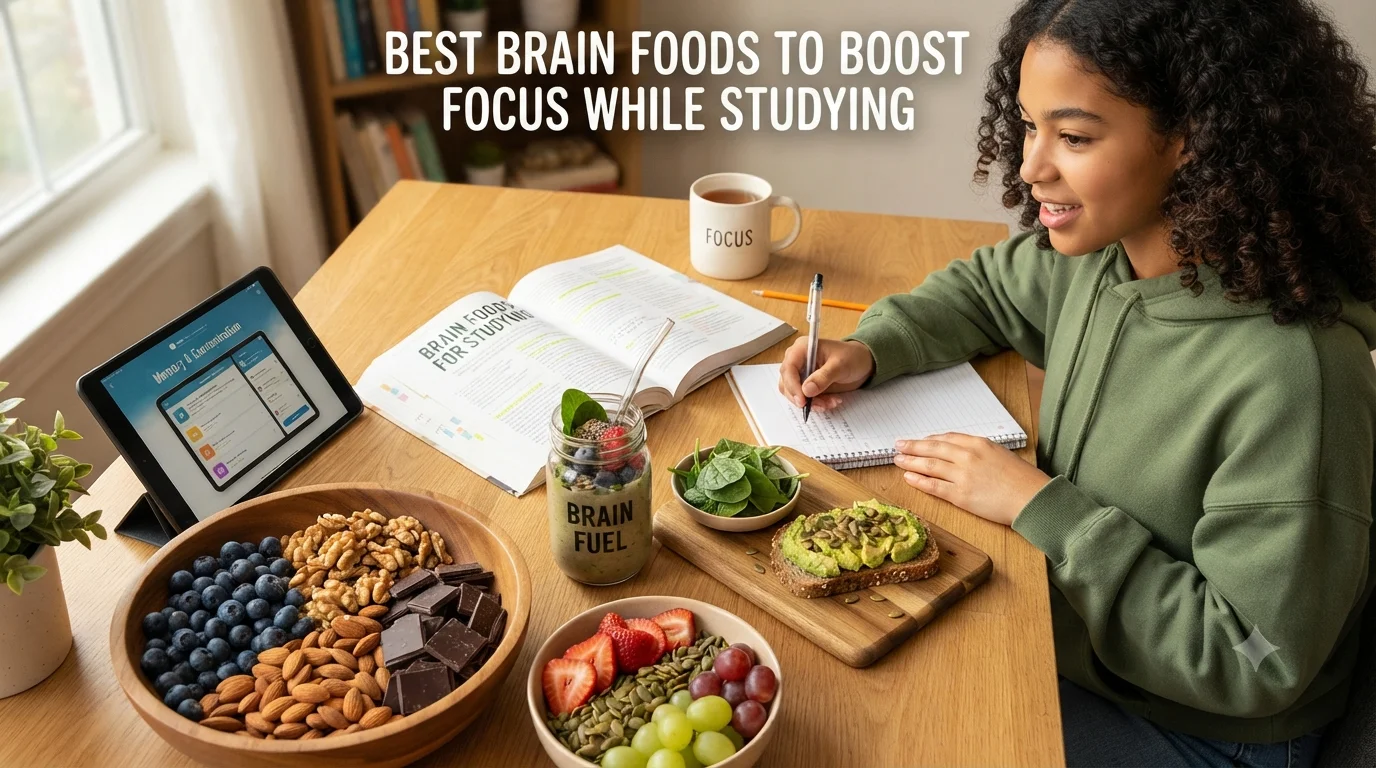
Many students rely on sugary snacks or multiple cups of coffee to stay awake, but these quick fixes often lead to energy crashes and reduced focus. Choosing the right brain foods for studying provides a more sustainable source of energy while supporting healthy brain function throughout the day.
Modern nutrition research suggests that a balanced diet rich in vitamins, minerals, antioxidants, healthy fats, and high-quality protein may help support cognitive performance. Although no single food can instantly improve memory or guarantee better grades, combining nutritious eating habits with effective study routines can create the ideal environment for learning.
In this guide, we’ll explore the best healthy brain foods, practical study snacks, and everyday eating habits that may help improve concentration, support memory, and increase productivity.
read more about best phone for students
Why Nutrition Matters for Brain Performance
The human brain accounts for only a small percentage of body weight, yet it consumes a significant amount of the body’s daily energy.
Every time you:
- Solve a math problem
- Memorize vocabulary
- Read a textbook
- Write an essay
- Analyze information
your brain requires a constant supply of nutrients.
Without adequate nutrition, you may experience:
- Mental fatigue
- Difficulty concentrating
- Poor memory
- Low motivation
- Reduced productivity
Healthy eating provides your brain with the energy needed to perform these demanding cognitive tasks.
How Food Affects Concentration
Concentration depends on a steady supply of glucose, oxygen, hydration, and essential nutrients.
Highly processed foods often cause rapid spikes and drops in blood sugar, leading to fluctuating energy levels.
By contrast, balanced meals containing complex carbohydrates, protein, and healthy fats provide more consistent energy throughout long study sessions.
This is why choosing appropriate foods for concentration is important for students of all ages.
Nutrients That Support Brain Function
Several nutrients play important roles in maintaining normal brain health.
These include:
- Omega-3 fatty acids
- B vitamins
- Iron
- Magnesium
- Zinc
- Vitamin D
- Vitamin E
- Choline
- Antioxidants
Eating a varied diet helps ensure adequate intake of these nutrients.
Fatty Fish
Fatty fish are among the most frequently recommended brain foods for studying.
Examples include:
- Salmon
- Sardines
- Mackerel
- Trout
- Herring
These fish contain omega-3 fatty acids, which are important structural components of brain cells.
Including fatty fish in your weekly meals may support overall brain health as part of a balanced diet.
Eggs
Eggs provide several nutrients associated with healthy brain function.
They contain:
- High-quality protein
- Choline
- Vitamin B12
- Vitamin D
- Selenium
Choline plays an important role in producing acetylcholine, a neurotransmitter involved in learning and memory.
Eggs also make an excellent breakfast before school or university.
Blueberries
Blueberries are widely recognized for their antioxidant content.
Antioxidants help protect cells from oxidative stress.
Blueberries are popular study snacks because they are:
- Portable
- Naturally sweet
- Low in calories
- Easy to combine with yogurt or oatmeal
Many students enjoy them as a refreshing afternoon snack.
Walnuts
Walnuts provide healthy fats along with several vitamins and minerals.
They also contain plant-based omega-3 fatty acids.
Walnuts make convenient healthy brain foods because they require no preparation.
A small handful can provide satisfying energy during study breaks.
Almonds
Almonds contain:
- Vitamin E
- Magnesium
- Healthy fats
- Protein
- Fiber
Their combination of nutrients makes them one of the most popular foods for concentration.
They also pair well with fruit or yogurt.
Pumpkin Seeds
Pumpkin seeds are rich in several minerals involved in normal nervous system function.
These include:
- Zinc
- Iron
- Magnesium
- Copper
They also provide healthy fats and protein.
Sprinkle them over salads, yogurt, or oatmeal for added nutrition.
Dark Chocolate
Dark chocolate is a favorite among students.
It contains:
- Cocoa flavonoids
- Iron
- Magnesium
Some people also enjoy its small amount of caffeine.
Choose varieties containing higher cocoa percentages and enjoy them in moderation.
Oatmeal
Oatmeal provides complex carbohydrates that release energy gradually.
Compared with sugary breakfast cereals, oatmeal helps provide longer-lasting energy.
Popular toppings include:
- Blueberries
- Walnuts
- Bananas
- Chia seeds
- Cinnamon
This combination creates a balanced breakfast before studying.
Greek Yogurt
Greek yogurt combines protein with calcium and beneficial nutrients.
Add:
- Fresh fruit
- Nuts
- Seeds
to create one of the easiest healthy brain foods for busy students.
Bananas
Bananas offer natural carbohydrates and potassium.
They are:
- Affordable
- Portable
- Filling
- Easy to digest
Bananas also pair well with peanut butter for a balanced snack.
Avocados
Avocados contain:
- Healthy monounsaturated fats
- Fiber
- Potassium
- Folate
Healthy fats support overall brain function as part of a nutritious diet.
Mash avocado onto whole-grain toast for a satisfying study meal.
Leafy Green Vegetables
Vegetables such as:
- Spinach
- Kale
- Swiss chard
provide numerous vitamins and minerals.
Including vegetables regularly supports overall health, which contributes to sustained learning and productivity.
Broccoli
Broccoli contains:
- Vitamin C
- Vitamin K
- Fiber
- Antioxidants
It works well in lunch or dinner meals before evening study sessions.
Whole Grains
Whole grains provide slow-releasing carbohydrates.
Examples include:
- Brown rice
- Quinoa
- Whole wheat bread
- Whole grain pasta
- Barley
These foods help maintain consistent energy levels.
Beans and Lentils
Beans provide:
- Protein
- Fiber
- Iron
- Complex carbohydrates
Because digestion occurs gradually, they help provide sustained energy during long periods of concentration.
Sweet Potatoes
Sweet potatoes contain:
- Complex carbohydrates
- Vitamin A
- Fiber
- Potassium
They make an excellent alternative to refined carbohydrates.
Citrus Fruits
Oranges, grapefruits, and mandarins provide:
- Vitamin C
- Water
- Natural sugars
These fruits also help support hydration.
Apples
Apples remain one of the simplest study snacks.
They provide:
- Fiber
- Natural sweetness
- Hydration
Pairing apples with peanut butter adds healthy fats and protein.
Berries
Besides blueberries, many berries provide antioxidants.
Examples include:
- Strawberries
- Blackberries
- Raspberries
Their vibrant colors reflect naturally occurring plant compounds.
Chia Seeds
Chia seeds provide:
- Fiber
- Protein
- Healthy fats
Add them to:
- Smoothies
- Yogurt
- Oatmeal
- Overnight oats
Flaxseeds
Ground flaxseeds offer plant-based omega-3 fatty acids.
They are easy to add to:
- Breakfast bowls
- Smoothies
- Whole grain cereal
Green Tea
Many students prefer green tea instead of large amounts of coffee.
Green tea contains:
- Moderate caffeine
- L-theanine
This combination may help promote alertness while providing a gentler caffeine source than some energy drinks.
Coffee
Coffee remains one of the most popular beverages during exam periods.
Moderate intake may improve alertness for many adults.
However, excessive caffeine may contribute to:
- Restlessness
- Difficulty sleeping
- Anxiety
- Rapid heartbeat
Balance is important.
Water
Hydration is often underestimated.
Even mild dehydration may reduce concentration.
Keep a reusable water bottle nearby during study sessions.
Drink regularly throughout the day.
Healthy Breakfast Ideas
Starting your day with balanced nutrition supports productive studying.
Examples include:
- Oatmeal with blueberries and walnuts
- Greek yogurt with berries
- Eggs with whole-grain toast
- Smoothie with spinach and banana
- Peanut butter on whole-grain bread
A nutritious breakfast provides consistent energy for morning classes or revision.
Healthy Lunch Options
Balanced lunches may include:
- Grilled chicken with brown rice
- Lentil soup
- Salmon with vegetables
- Quinoa salad
- Turkey sandwich on whole-grain bread
Avoid overly heavy meals that may increase sleepiness.
Smart Study Snacks
Nutritious snacks help maintain energy between meals.
Good options include:
- Mixed nuts
- Fruit
- Yogurt
- Hummus with vegetables
- Cheese with whole-grain crackers
- Pumpkin seeds
- Hard-boiled eggs
These snacks provide a combination of protein, healthy fats, and complex carbohydrates.
read more about audio quality for online learning
Foods That May Reduce Focus
Some foods may lead to temporary energy crashes when consumed in large amounts.
Examples include:
- Sugary drinks
- Candy
- Highly processed snacks
- Excess pastries
- Large quantities of fast food
Choosing balanced alternatives often provides more consistent energy.
Building Balanced Study Meals
Each meal should ideally contain:
- Protein
- Healthy fats
- Complex carbohydrates
- Fruits or vegetables
- Plenty of water
This combination supports sustained energy and overall health.
Planning Meals Around Your Study Schedule
Eating nutritious foods is important, but when you eat can also influence your energy and concentration throughout the day. Long study sessions without meals may leave you feeling tired and distracted, while eating very large meals immediately before studying can make you feel sluggish.
A practical approach is to eat balanced meals at regular intervals and include healthy snacks between them if needed.
A typical study day could look like this:
- Nutritious breakfast
- Mid-morning study snack
- Balanced lunch
- Afternoon snack
- Healthy dinner
- Light evening snack if studying late
This routine helps provide your brain with a steady supply of energy.
Why Breakfast Is So Important
After sleeping overnight, your body has gone several hours without food.
Breakfast replenishes energy stores and prepares your brain for learning.
A healthy breakfast should include:
- Complex carbohydrates
- Protein
- Healthy fats
- Fruit
Examples include:
- Oatmeal with walnuts and blueberries
- Eggs with whole-grain toast
- Greek yogurt with berries
- Smoothies made with fruit, spinach, and yogurt
Skipping breakfast may leave some people feeling less energetic during morning classes or study sessions.
The Role of Protein in Mental Performance
Protein helps keep you feeling satisfied for longer periods.
Excellent protein sources include:
- Eggs
- Greek yogurt
- Chicken
- Turkey
- Fish
- Beans
- Lentils
- Cottage cheese
- Tofu
Combining protein with complex carbohydrates creates balanced meals that support sustained energy.
Complex Carbohydrates vs. Simple Sugars
Not all carbohydrates affect the body in the same way.
Simple sugars found in candy and sugary drinks are absorbed quickly, which may cause rapid spikes and drops in blood sugar.
Complex carbohydrates digest more gradually.
Examples include:
- Brown rice
- Oats
- Sweet potatoes
- Whole-grain bread
- Quinoa
- Whole-wheat pasta
These are among the best foods for concentration because they provide more consistent energy.
Healthy Fats Support Brain Function
The brain contains a significant amount of fat, making healthy dietary fats an important part of balanced nutrition.
Good sources include:
- Avocados
- Olive oil
- Walnuts
- Almonds
- Chia seeds
- Flaxseeds
- Fatty fish
These foods also help make meals more satisfying.
Colorful Fruits and Vegetables
Eating a variety of colorful produce helps provide vitamins, minerals, and antioxidants.
Aim to include different colors throughout the week:
Red
Examples:
- Strawberries
- Tomatoes
- Red peppers
Orange
Examples:
- Carrots
- Sweet potatoes
- Oranges
Green
Examples:
- Spinach
- Broccoli
- Kale
Purple
Examples:
- Blueberries
- Blackberries
- Purple cabbage
A colorful plate generally reflects a wider variety of nutrients.
Healthy Study Snacks That Travel Well
Students often study in libraries, classrooms, or coffee shops.
Portable study snacks make healthy eating easier.
Convenient options include:
- Mixed nuts
- Trail mix
- Apples
- Bananas
- Protein bars with simple ingredients
- Roasted chickpeas
- Pumpkin seeds
- Cheese sticks
- Whole-grain crackers
- Fresh berries
Preparing snacks in advance reduces the temptation to buy less nutritious alternatives.
Staying Hydrated During Long Study Sessions
Hydration plays an important role in maintaining concentration.
Keep water within reach while studying.
You can also increase fluid intake through foods such as:
- Watermelon
- Cucumbers
- Oranges
- Strawberries
- Soups
If plain water feels repetitive, try adding:
- Lemon slices
- Mint
- Cucumber
- Orange slices
These additions provide flavor without added sugar.
Smart Caffeine Habits
Coffee and tea can help many adults feel more alert.
However, excessive caffeine may interfere with:
- Sleep
- Relaxation
- Concentration
- Mood
Helpful tips include:
- Avoid excessive energy drinks.
- Limit caffeine late in the day.
- Drink water alongside caffeinated beverages.
- Don’t replace meals with coffee.
Quality sleep remains more important than caffeine for learning.
Foods to Limit During Exam Season
Exam stress often encourages unhealthy eating habits.
Common choices include:
- Sugary sodas
- Candy
- Chips
- Fast food
- Highly processed desserts
These foods may provide temporary satisfaction but often fail to support consistent energy throughout the day.
This doesn’t mean you need to avoid treats completely.
Balance is the goal.
Sample One-Day Brain-Friendly Meal Plan
Breakfast
- Oatmeal
- Blueberries
- Walnuts
- Greek yogurt
Morning Snack
- Apple
- Almonds
Lunch
- Grilled chicken
- Brown rice
- Steamed broccoli
Afternoon Snack
- Carrot sticks
- Hummus
Dinner
- Baked salmon
- Sweet potato
- Spinach salad
Evening Snack
- Cottage cheese
- Strawberries
This meal plan combines several healthy brain foods throughout the day.
Weekly Meal Preparation Tips
Preparing meals in advance helps students stay consistent.
Ideas include:
- Cook grains in batches.
- Wash fruit ahead of time.
- Portion nuts into small containers.
- Prepare overnight oats.
- Freeze smoothie ingredients.
- Boil eggs in advance.
Meal preparation saves time during busy academic weeks.
The Importance of Sleep Alongside Nutrition
No food can replace adequate sleep.
During sleep, the brain supports important processes involved in learning and memory.
Most adults benefit from consistent, sufficient sleep each night.
Combining good nutrition with healthy sleep habits provides better support for studying than relying on food or caffeine alone.
Exercise Also Supports Learning
Regular physical activity complements healthy eating.
Exercise may help improve:
- Mood
- Energy
- Stress management
- Overall health
Even short walks between study sessions can help break up long periods of sitting.
read more about academic writing books
Creating a Productive Study Environment
Nutrition is only one piece of effective studying.
Your environment also matters.
Helpful habits include:
- Good lighting
- Comfortable seating
- Limited distractions
- Organized materials
- Scheduled study breaks
- Regular hydration
These habits work together with healthy eating to support productivity.
Common Nutrition Myths About Studying
Myth: Sugar Gives Long-Term Energy
Sugary foods may provide a quick burst of energy, but this is often followed by a decline that can leave you feeling tired.
Balanced meals generally provide more sustained energy.
Myth: Coffee Can Replace Sleep
Coffee may temporarily increase alertness, but it cannot replace the benefits of adequate sleep for learning and memory.
Myth: One “Superfood” Can Improve Grades
There is no single food that guarantees better academic performance.
A balanced diet that includes a variety of brain foods for studying is more beneficial than relying on any one ingredient.
Myth: Skipping Meals Helps You Study Longer
Missing meals can leave some people feeling hungry and distracted, making it harder to maintain focus.
Healthy Habits Beyond Food
Supporting brain health involves multiple lifestyle factors.
Try to:
- Stay hydrated.
- Eat regular meals.
- Get enough sleep.
- Exercise consistently.
- Take study breaks.
- Manage stress.
- Limit excessive screen time before bed.
These habits complement nutritious eating.
Frequently Asked Questions
What are the best brain foods for studying?
Some commonly recommended brain foods for studying include fatty fish, eggs, blueberries, walnuts, almonds, oats, leafy greens, Greek yogurt, and whole grains as part of a balanced diet.
Which foods help improve concentration?
Balanced foods for concentration often combine protein, healthy fats, and complex carbohydrates. Examples include oatmeal with nuts, whole-grain toast with eggs, Greek yogurt with fruit, and hummus with vegetables.
What are good study snacks?
Healthy study snacks include fruit, mixed nuts, yogurt, pumpkin seeds, roasted chickpeas, cheese with whole-grain crackers, and vegetables with hummus.
Is coffee good for studying?
For many adults, moderate coffee consumption may increase alertness. However, excessive caffeine can affect sleep and increase nervousness, so moderation is important.
Should I study on an empty stomach?
Many people find it easier to concentrate after eating a balanced meal or snack. Going too long without food may reduce energy and focus for some individuals.
Nutrition Strategies for Exam Week
Exam periods often bring longer study sessions, tighter schedules, and increased stress. During these weeks, many students skip meals, rely on fast food, or consume excessive amounts of caffeine and sugary snacks. While these habits may seem convenient, they rarely provide the steady energy needed for sustained concentration.
Instead, build your meals around whole foods that provide balanced nutrition. Eating consistently throughout the day helps maintain energy levels and may reduce the temptation to reach for highly processed snacks.
A practical exam-week routine might include:
- A balanced breakfast before studying
- A healthy mid-morning snack
- A nutritious lunch
- A light afternoon snack
- A balanced dinner
- Plenty of water throughout the day
This approach supports steady energy without the dramatic highs and lows associated with large amounts of sugar.
Preparing Brain-Friendly Meals in Advance
Meal preparation saves valuable time during busy academic periods.
Preparing several meals in advance means you’ll always have healthier options available instead of relying on convenience foods.
Simple meal prep ideas include:
- Cooking brown rice or quinoa in batches
- Grilling chicken for several meals
- Washing and cutting vegetables
- Portioning mixed nuts into containers
- Preparing overnight oats
- Freezing smoothie ingredients
- Boiling eggs ahead of time
These simple habits make healthy eating much easier during demanding study weeks.
Healthy Snacks for Long Library Sessions
Many students spend hours in libraries or study rooms.
Portable study snacks help maintain energy without creating a mess.
Excellent options include:
- Apples
- Pears
- Bananas
- Blueberries
- Almonds
- Walnuts
- Pistachios
- Pumpkin seeds
- Trail mix
- Whole-grain crackers
- String cheese
- Greek yogurt
- Roasted chickpeas
These foods combine convenience with balanced nutrition.
Easy Smoothies for Busy Students
Smoothies are an excellent way to combine multiple healthy brain foods into one meal.
Berry Brain Smoothie
Ingredients:
- Greek yogurt
- Blueberries
- Strawberries
- Banana
- Chia seeds
- Milk of choice
Green Energy Smoothie
Ingredients:
- Spinach
- Banana
- Oats
- Almond butter
- Greek yogurt
- Milk
Tropical Smoothie
Ingredients:
- Mango
- Pineapple
- Orange
- Greek yogurt
- Flaxseeds
These smoothies are easy to prepare and convenient for busy mornings.
Vegetarian Brain Foods
Students following vegetarian diets have many nutritious options.
Examples include:
- Lentils
- Chickpeas
- Beans
- Tofu
- Tempeh
- Eggs (for vegetarians who eat them)
- Dairy products
- Nuts
- Seeds
- Whole grains
Combining different plant-based protein sources throughout the day helps create balanced meals.
Vegan Brain Foods
Vegan students can also enjoy a wide variety of brain foods for studying.
Good choices include:
- Oats
- Quinoa
- Brown rice
- Lentils
- Chickpeas
- Black beans
- Almonds
- Walnuts
- Chia seeds
- Flaxseeds
- Avocados
- Fruits
- Vegetables
Fortified plant-based milks may also contribute important nutrients.
Budget-Friendly Brain Foods
Healthy eating doesn’t have to be expensive.
Affordable options include:
- Oatmeal
- Eggs
- Bananas
- Frozen vegetables
- Brown rice
- Lentils
- Beans
- Peanut butter
- Carrots
- Apples
- Cabbage
- Popcorn (lightly seasoned)
Many of these foods store well and can be used in multiple meals.
Grocery Shopping Tips for Students
Shopping with a plan helps reduce unnecessary spending.
Before visiting the store:
- Make a shopping list.
- Plan meals for the week.
- Avoid shopping while hungry.
- Compare prices.
- Buy seasonal produce.
- Choose frozen fruits and vegetables when appropriate.
These habits make healthy eating more practical and affordable.
Foods That Pair Well Together
Combining different food groups often creates more satisfying meals.
Examples include:
Apple + Peanut Butter
Provides:
- Fiber
- Healthy fats
- Protein
Greek Yogurt + Berries
Provides:
- Protein
- Calcium
- Antioxidants
Whole-Grain Toast + Eggs
Provides:
- Protein
- Complex carbohydrates
Oatmeal + Walnuts
Provides:
- Fiber
- Healthy fats
Hummus + Vegetables
Provides:
- Protein
- Fiber
- Vitamins
Balanced combinations support steady energy.
Managing Energy During Long Study Sessions
Instead of studying continuously for several hours without breaks, consider shorter study periods separated by brief breaks.
During these breaks you can:
- Drink water
- Stretch
- Eat a healthy snack
- Walk for a few minutes
- Rest your eyes
Combining healthy nutrition with regular breaks helps maintain productivity throughout the day.
Healthy Drinks for Studying
Hydration remains one of the simplest ways to support concentration.
Good beverage choices include:
- Water
- Sparkling water
- Herbal tea
- Green tea
- Milk
- Smoothies
Try to limit beverages containing excessive added sugar.
The Importance of Consistency
Healthy eating is most effective when practiced consistently.
Eating one nutritious meal before an exam cannot replace weeks or months of balanced nutrition.
Instead, aim to build sustainable habits.
Small improvements repeated daily often have the greatest long-term impact.
Creating a Brain-Friendly Daily Routine
Nutrition works best when combined with other healthy habits.
An example routine might include:
Morning:
- Healthy breakfast
- Water
- Study session
Mid-morning:
- Healthy snack
- Short walk
Lunch:
- Balanced meal
- Hydration
Afternoon:
- Study session
- Fruit or yogurt
Evening:
- Nutritious dinner
- Light review session
- Relaxation before sleep
This routine supports consistent energy throughout the day.
Common Mistakes Students Make
Many students unintentionally reduce their productivity through poor nutrition habits.
Examples include:
Skipping Breakfast
Starting the day without eating may leave some people feeling less energetic.
Too Much Sugar
Large amounts of sugary foods often provide short-lived energy followed by a noticeable decline.
Excessive Caffeine
Too much caffeine may interfere with sleep and increase nervousness.
Not Drinking Enough Water
Even mild dehydration can make studying feel more difficult.
Irregular Meal Times
Waiting too long between meals may increase hunger and reduce concentration for some people.
Recognizing these habits is the first step toward making positive changes.
Building Long-Term Healthy Habits
Academic success depends on many factors, including preparation, study techniques, sleep, stress management, and nutrition.
Healthy eating should become part of your daily lifestyle rather than something reserved only for exam periods.
Simple habits include:
- Eating breakfast regularly
- Including vegetables with meals
- Choosing fruit for snacks
- Drinking enough water
- Preparing meals ahead of time
- Limiting highly processed foods
- Sleeping consistently
These habits benefit both academic performance and overall well-being.
Frequently Asked Questions
What are the best brain foods for studying before an exam?
Balanced meals containing brain foods for studying such as oatmeal, eggs, berries, nuts, Greek yogurt, whole grains, and fruit provide steady energy and valuable nutrients. Rather than relying on a single “superfood,” aim for a varied and balanced diet.
Which foods help improve concentration the most?
Many foods for concentration combine complex carbohydrates, protein, and healthy fats. Examples include whole-grain toast with eggs, Greek yogurt with berries, oatmeal with walnuts, hummus with vegetables, and brown rice with lean protein.
Are study snacks better than large meals?
Healthy study snacks can help maintain energy between meals, especially during long revision sessions. Pairing fruit with nuts, yogurt with berries, or whole-grain crackers with cheese provides balanced nutrition without feeling overly heavy.
Can certain foods improve memory overnight?
No single food can instantly improve memory. Long-term brain health is supported by consistent healthy eating, adequate sleep, regular exercise, stress management, and effective study habits.
Is drinking more coffee the best way to stay focused?
Moderate coffee intake may increase alertness for many adults, but excessive caffeine can disrupt sleep and cause nervousness. Quality sleep and balanced nutrition remain far more important for learning and memory.
read more about study planner app
Choosing the right brain foods for studying is one of the simplest ways to support productive learning sessions. While no single ingredient can guarantee better grades or instantly improve memory, a balanced diet rich in fruits, vegetables, whole grains, healthy fats, lean proteins, and plenty of water provides the nutrients your brain needs to function efficiently. Pairing these foods with nutritious study snacks helps maintain steady energy throughout long revision sessions and reduces the temptation to rely on sugary or highly processed alternatives.
It’s also important to remember that nutrition is only one part of academic success. Regular sleep, physical activity, effective time management, and consistent study habits all contribute to better learning outcomes. By combining healthy brain foods with smart lifestyle choices and selecting balanced foods for concentration, students can create an environment that supports focus, memory, productivity, and overall well-being throughout the school year and beyond.